Friday, March 9, 2012

Walter Pidgeon?!?

According to his memoir, Full Service, Scotty Bowers, a Marine in WWII, spent a good chunk of his life as a pimp and a whore to Hollywood stars and celebrities, male and female. The subtitle of the book, My Adventures in Hollywood and the Secret Sex Lives of the Stars, pretty much sums up its appeal. I love a gossipy tell-all as much as the next bitch, but this one leaves a lot to be desired.

It opens with a bang, so to speak, as young studly Bowers, a gas station attendant in Hollywood, is hit on by Walter Pidgeon, taken to a Hollywood mansion swimming pool, and has a three-way with Pidgeon and a non-celeb. Starting with Pidgeon is a good move to establish your credentials; he's not the biggest name these days, and he's not someone about whom I've ever heard many gay rumors. (I almost titled this post, "I Blew Walter Pidgeon," but that would have been too scandalous even for me.) But most of the rest of the parade of celebs (mostly gay or bisexual) that pass through this book are the usual suspects: Charles Laughton, Rock Hudson, Anthony Perkins, Katherine Hepburn, Errol Flynn, Ramon Novarro, Cary Grant & Randolph Scott (pictured below) and many more. It's a hopping busy gas station.

The problem with this book is that it is terribly written. The style, construction, and narrative flow are all just awful. Bowers apparently (with his co-author Lionel Friedberg) didn't want this to be pornographic--there is almost no graphic sexual content--but there's no other reason to read this book than to be titillated. The simplistic style apes that of porn fiction, but without the porn all you have is deadly dull prose. It's also repetitive; all of the stars are his dear friends (except for Roddy McDowell, with whom he apparently didn't get along), and he uses the word "trick" and its variations constantly--he sets up tricks for Hepburn, he tricks with Perkins, etc. Despite all the tricking, he insists he wasn't a pimp because he didn't take money, he just made arrangements for others for fun, or out of the goodness of his heart, but still, a pimp's a pimp for all that.

Bowers rarely come to life in these pages. I believe he's real and his adventures are probably real, but we get very little sense of any inner life. Every so often (too often, in fact), he notes that he's not one to judge the morality or kinkiness or his "friends," and his background story is moderately interesting, but there is absolutely no reflection or philosophizing that goes any deeper than, "To each his own."

If you're willing to brave bad prose and a couple of fairly standard coming-of-age chapters, you will get to a few juicy stories. Most interesting to me is his claim about Katherine Hepburn and Spencer Tracy. I've read that their much-vaunted romance was more an intense friendship than a love affair, but Bowers claims that they didn't even like each other very much. There's also a three-way with Errol Flynn and a young lady that sounds like it really happened, and he tells us that Tyrone Power was into watersports and scat (check Wikipedia). J. Edgar Hoover, Brian Epstein, Cole Porter, and the Duke and Duchess of Windsor--Eddie and Wallis--all get a few paragraphs, but honestly after a while, it all sounded either fake or exaggerated. Bowers should have taken some hints from Xaviera Hollander (The Happy Hooker) and at least made the book a hot read. But it's not.

Monday, February 27, 2012

Broadway on TV

The new show Smash is about the making of a Broadway musical; though hit musicals still tour the country, the audience for such a show would seem to be fairly small, especially in terms of audience size needed for a network hit (at least 8 million, I think), but recent programs like American Idol and (especially) Glee have made its appearance possible. As a theater fan, I was looking forward to this show, and the pilot episode was promising, but that promise is being squandered.

The plot revolves around a Broadway musical about Marilyn Monroe: the songwriting team working on it, the producer trying to raise money for it, the hopefuls auditioning for it, the director putting it on, and various tangential folks (assistants, friends, family). When the (TV) show sticks with the (Broadway) show, it is great fun. As song and dance numbers are rehearsed, we see the actual bare-bones rehearsal intercut with the full-fledged vision the creators have for the finished numbers, and these usually wind up the best parts of the show. The original songs, by Marc Shaiman and Scott Wittman, co-writers of the musical Hairspray, are quite good and feel like authentic show tunes.

At least two of the actors are very good: Debra Messing as one-half of the songwriting team and Angelica Huston as the producer. Both are saddled with soap opera plots: Messing and her husband are trying to adopt a baby (though why, when they have a teenage boy, is never explained) and Huston is going through a messy divorce from her former co-producer. The best running gag involves Huston tossing a martini in her ex-husband's face. Every time a drink and the husband are in the shot, you know it's going to end up splashed across his face. For some reason, I haven't gotten tired of this yet--in fact, I look forward to it.


That's the good. The rest is not so good. There's the gay composer who is given little to do, his straight assistant who started out sweet and is becoming a creep, and the somewhat slimy director who sleeps with his leading ladies. The main focus is on the two women vying for the lead role of Marilyn. Katherine McPhee (at the top of the pyramid in the logo photo) is the nice girl from the sticks trying for her first role outside of the chorus. We seem to be steered toward favoring her, as she is pretty, pleasant, friendly, and of course, the underdog. But her personality is bland and her voice is plain and overprocessed, making her sound like a mid-range "Idol" contestant. Megan Hilty, the other hopeful (pictured above), has played supporting roles on Broadway and has the advantage of already being blond and fairly buxom, and her voice is far more of a natural "Broadway belter." What I like is that, in some ways, we root for both of them; neither one has been demonized (yet). But Hilty is so clearly the better option for the role of Marilyn that there was very little suspense in the first few shows--SPOILER!: Hilty gets the role, though I'm wondering if what's in store for McPhee is to be the understudy who gets to go on in the lead at the last minute.

My biggest problems with the show so far involve the soap-opera elements, and I guess that's not fair because it really is a soap opera. I was hoping for more color, more fun, more larger-than-life personalities, or conversely, more reality about how stage actors struggle against the odds. The show is pitched in the middle right now and, though I'll probably stick with it, I'm feeling like an opportunity for a really interesting and enjoyable show on this subject has been lost.

Friday, February 10, 2012

Macca the jazzbo

Well, it's been a while. I used to post to this blog when I had a reference desk job in a library and I had a fair amount of time on my hands in front of a computer. Now my library job is in Technical Services, which means I'm not in the public eye, but I'm busy in front of the computer all day long, hence fewer posts here over the past year. I'm still consuming media, but I have less time to think and write about my consumption. So in order to reboot my blog, I'm going to try and write shorter posts.

I'll start with Kisses on the Bottom, the new Paul McCartney album. I love Paul, but he's largely a spent force on the music scene. He gets an album out every few years, there are usually respectable reviews, it hits the charts for a few weeks, then disappears. This new one is a collection of standards, or at least older songs. Some truly are standards ("Bye Bye Blackbird," "It's Only a Paper Moon") and some are songs that are less well-remembered ("Get Yourself Another Fool," a cute novelty song called "My Very Good Friend the Milkman"). He performs them in nightclub-jazz style--subdued vocals, brushes on drums--and he has some musicians with true jazz chops, including Diana Krall and John Pizzarelli, backing him.

But Paul is not a jazz singer, and he strains to sound like one. For most of the album, he sounds like a very old man half-whispering the songs. My first thought was, Oh, poor Paul, he can't sing anymore. But on a handful of songs, including the upbeat "Ac-cent-tchu-ate the Positive," he sounds like the same old Paul. So I'm guessing on the other songs, he was trying on the "jazz singer in a film noir nightclub" suit. It doesn't fit well. As an experiment, it was fun to listen to once, but the album is not a keeper. The odd title, by the way, comes from a line in "I'm Gonna Sit Right Down and Write Myself a Letter" about putting XXXs at the bottom of a letter.

Friday, November 4, 2011

Horror on TV

For me, horror works best on TV in an anthology format, like Twilight Zone, Thriller, or Night Gallery. I'm not a big fan of hour-long dramas of any stripe, but I did enjoy several seasons of The X-Files, which for me worked best when it was almost like an anthology show, with Mulder and Scully investigating a new weird case each week, but then the background arc story stuff got too thick. I watched Supernatural for a few weeks, but it had the same background problems. This season, two new non-anthology horror shows have debuted and against my better judgment I sampled them.

American Horror Story, on FX, had promise, with one of the most traditional horror tropes at its center: the haunted house. A couple (Dylan McDermott and Connie Britton) move in to a house where people have either died under strange circumstances or been driven out by strange occurrences. Sure enough, there are ghosts, not just in the house but next door (the eccentric neighbor is Jessica Lange, seeming a stone's throw away from her Big Edie character in Grey Gardens). Dylan and Connie have moved in order to put the past behind them: she had a miscarriage, he had an affair, and their daughter is a cutter. But of course, things just get worse in the haunted house.

Each episode has a story that gets resolved, but the arc story is clearly more important, and there are some interesting plotlines set up. Lange's mentally disabled daughter has a disturbing tendency to 1) pop up in McDermott's house uninvited and 2) predict that people will die in the house. There is also a man in a leather fetish suit who has sex with Britton and gets her pregnant (she thinks it was her husband, but we know it wasn't). A disfigured former tenant of the house (Denis O'Hare, pictured with McDermott) shows up from time to time, trying to tell McDermott to get out of the house. But there is also the very tedious story of the messed-up daughter and her messed-up boyfriend (who might be one of the ghosts). There are R-rated obscenities, and almost R-rated nudity (Mr. McDermott is in damned good shape at 40), and a dark look and brutal tone which seem borrowed from movies like Saw.

Despite the promise, it failed to hook me after two episodes. The arc story lines are many, and like lots of arc-story shows, there's the feeling that either things won't get explained, or when they do, they'll seem stupid. None of the characters is sympathetic; in fact, I was kind of rooting for Jessica Lange to get rid of the whole bunch. Perhaps its biggest failing is the most obvious: why the hell are these people going to stay in this house for a full 13-week season? Next post: Grimm.

Sunday, September 18, 2011

Connections or the Lack Thereof, Part 2

Wow, it's been almost two months since I wrote Part 1. Time flies whether you're having fun or not. Anyway, the other book pop culture book I read was Fire and Rain: The Beatles, Simon & Garfunkel, James Taylor, CSNY and the Lost Story of 1970 by David Browne. For this baby-boomer who was coming of age in the early 70's, this was a fun read. I owned 3 of the 4 albums under discussion in the book: Let it Be, Bridge Over Troubled Water, and Deja Vu (I've never owned a James Taylor album even though I liked his early music). The author does a nice job writing about the circumstances of each album's recording, release, and reception. Most of the material about Let It Be was old hat to this Beatle fan, and as I recently read Shakey, a biography of Neil Young, the CSNY material was familiar to me. Most of the new information I gained was about James Taylor: I didn't know he lived with Joni Mitchell for a spell--I suspect a list of her lovers would read like a Who's Who of 70s California rock--and though I knew he was hooked on heroin in his youth, I didn't know he was on and off of it for so long.

The disappointing part of the book comes in connection with the subtitle, and the "connection or the lack thereof" of my blog entry title. Browne begins by saying that 1970 has gotten a bad rap in pop culture history, that years like 1967 (the Summer of Sgt. Pepper) or 1969 (Woodstock) are considered more important, but that 1970 truly marked the end of an era and the beginning of another. He points out that 1970 was the year of the last albums by the Beatles and Simon & Garfunkel, and the first albums by CSNY and James Taylor, but never explains the significance of this. It's not like the last/first dichotomy really works--there was a previous CSN album, and Young only made a couple of albums with the group; there was also an earlier James Taylor album but it didn't make the charts. And Paul Simon continued to be a force in pop music at least through the 90s.

I like that Browne does make some fun if insubstantial connections, such as that 1970 started with Paul McCartney attending a Crosby Stills Nash & Young concert, and that James Taylor's first album was on the Beatles' label Apple, but ultimately the connections don't hold up, and certainly there is no real argument made about the cultural importance of 1970. Browne is also inconsistent about discussing the music: he does a nice job with Taylor and some of the songs on Bridge Over Troubled Water, but not much with the other two groups. Still, he did do his homework, and this was fun to read from a nostalgia viewpoint. He also sent me back to the music of these artists, and there's nothing wrong with that.

Thursday, July 28, 2011

Connections or the Lack Thereof, Part 1

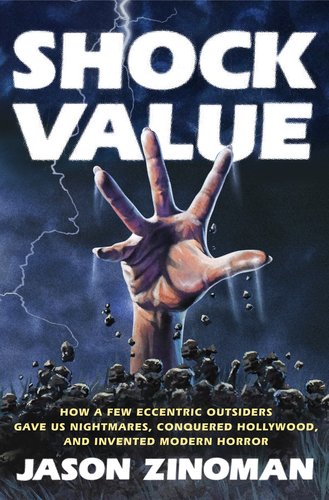
Two pop culture books I’ve read recently take group of artists bound by genre and time, and try to make overarching connections among them. Neither book is really successful at fulfilling its thesis, but both are interesting reads. The first, Shock Value by Jason Zinoman, is about the filmmakers behind what he dubs the “New Horror” movement of the late 60s and early 70s. He correctly points to Hitchcock’s Psycho as the seed for the more graphic horror films that came later, and he gives a lot of attention to all the right people--George Romero, Wes Craven, Tobe Hooper, John Carpenter, Dan O’Bannon--and gives interesting anecdotes about the making and reception of films like Night of the Living Dead, The Last House on the Left and Halloween, but the most interesting thing he does is start with two movies not often grouped with the other grisly thrillers: Roman Polanski’s Rosemary’s Baby and Peter Bogdanovich’s Targets.

Zinoman argues that Rosemary’s Baby was the first modern mainstream horror hit, making a big pop culture splash (and a lot of money) and marking the end of the career of 60s schlock filmmaker William Castle, who produced the movie and wanted to direct it until Paramount nixed that idea. (A Castle Rosemary’s Baby would almost certainly have been cheap-looking, had some chintzy gimmick--like a man dressed as Satan running up and down the aisles in the theater--and had a blonde, big-breasted screamer as Rosemary.)

Targets, a B-film co-produced by Roger Corman, who was a more successful Castle, was one of the last films of Boris Karloff, who plays a washed-up horror movie star lamenting that the horrors of the real world have surpassed all the old movie monsters. Though not a hit, it’s a good movie that is still worth watching, and Zinoman argues that it was the first to have a “monster” that wasn’t explained; in this case, an average young man who goes on a shooting spree for no discernible reason. He is ultimately defeated but his rationale is never given. The author draws a line from Targets’ shooter to Michael Myers in the first Halloween, an “empty space” at the center of the movie. In both cases, we are given just enough information to make guesses at each killer’s motives, but we are left not knowing for sure.

Coverage of the actual “New Horror” films is predictable but interesting and highly readable. Most of the directors were rather bookish and academic, and weren’t looking to become horror specialists, but got penned in to the genre after their first big hits. Zinoman spends an inordinate amount of time on Dan O’Bannon, a rather cranky writer who, after making Dark Star, a B-sci-fi spoof with John Carpenter, went on to write the first draft of Alien. He was frequently in a lot of stomach pain due to Crohn’s disease, which inspired the infamous stomach birthing scene with John Hurt. But after that, O’Bannon seemed unable to work well with others and he never had the career that some had predicted for him. O’Bannon and Carpenter had a major falling-out and O’Bannon spews a lot of bile aimed at Carpenter, who is never defended in the book’s pages.

I wish Zinoman had been able to make his larger connecting arguments with more force. He’s good about the films and the people, but not so good about looking beyond, at popular culture and the tenor of the times. I like that he considers Jaws a horror film, and that he includes Brian DePalma as one of the seminal horror directors of the 70s (even though only Carrie is probably, by definition, a real horror movie). Definitely a good addition to the bookshelf of any movie buff. Next post, a book about the music of 1970.

Wednesday, June 15, 2011

The magic of Lord Dunsany

I think of myself as having been a fantasy fiction fan in my youth, but really I was more in love with the idea of fantasy. Starting with Ray Bradbury when I was about 11 years old, I immersed myself in, to give it a more inclusive name, speculative fiction, which pretty much covers fantasy, science fiction, and anything that takes place in a world that isn’t quite ours. Bradbury is generally thought of as a sci-fi writer, but really most of his work is fantasy, with scientific concerns only secondary to his poetic explorations of nostalgia, childhood, and social issues. The Mars of The Martian Chronicles is much more like an earthly fantasy world than, let’s say, the harder action/sci-fi Mars of Edgar Rice Burroughs.

But when I started reading traditional fantasy, I realized I wasn’t really such a big fan. In high school, the perfect time to discover Tolkien, I read The Hobbit twice, but could not get more than about 150 pages into the first of the Lord of the Rings book (and I tried three times). I dipped my toes in sword and sorcery, Tarzan, fairy world books, and spiritual fantasy (George MacDonald, CS Lewis) but never really took to any of those genres like I thought I should. Now, with the preponderance of trilogies and wizard children and the like, most things labeled "fantasy" don’t appeal to me at all--except for Lovecraft and his kind, whose writings are more horror than fantasy.

However, while reading a new book called Electric Eden, about the quasi-psychedelic folk-rock movement in the England in the 60s, I came across a reference to Lord Dunsany, a fantasy writer of the first half of the 20th century (pictured). I went down to the basement and, sure enough, there was a old Ballantine paperback of one of his novels, The Charwoman’s Daughter, which I'd bought used many years ago and never cracked open. I did so that night and am quite glad I did.

Despite the dragons on the cover of the paperback, the world of The Charwoman’s Daughter is not too far removed from the real world; it's set in Spain during a time referred to as "the Golden Age." The Lord of the Tower and Rocky Forest has come upon hard times and is trying to arrange a good marriage for his daughter despite having no money in her dowry, so he sends his son Ramon Alonzo to be tutored by a old magician who lives deep in the woods, alone except for an old cleaning lady, the charwoman of the title. The father, who did a favor for the magician many years ago, hopes the magician will teach the boy the art of alchemy so he can create some gold for the daughter's dowry.

At first, the magician seems kindly, but soon Ramon Alonzo discovers that the price for such learning is his shadow. The charwoman sold her shadow to the magician in her youth and has regretted it ever since; she is shunned for not casting a shadow (the townsfolk assume she has struck some kind of demonic deal) so she hasn’t left the magician's house for years. Despite the warning, Ramon agrees to give the magician his shadow and comes to regret it. Out of a sense of chivalry, he vows to get the charwoman's shadow back, and ideally his as well.

This is not a fantasy novel full of swords or magical creatures, though the magic of the magician is indeed real; there is a strange and evocative scene in which the magician communes with the various shadows he has taken over the years, sending them into deep space to faraway planets. The magical world is vague and mysterious; there are imps in the background, and a love potion plays an important role in the last half of the book. The spell this book casts is largely through language. As in an epic poem, there are certain almost incantatory phrases used throughout; the magician's secret room in which he keeps the box of shadows is always referred to as "the room that was sacred to magic." There is a character known as the Duke of Shadow Valley (almost sounds like a superhero). There is some beautiful writing: twilight is described as "the hour when Earth has most reverence, the hour when her mystery reaches out and touches the hearts of her children." A romantic relationship develops between the young Ramon and the old charwoman which is predictable (if you know your fairy tales) but still satisfying. And the last few pages, which involve the fate of the magician, and the Golden Age itself, are almost hallucinatorily beautiful.

In short, this is the fantasy novel that I was hoping to find in my youth, that might have kept me a fan of the genre for a long time. I’m hoping to spend much of the summer in the company of Lord Dunsany.